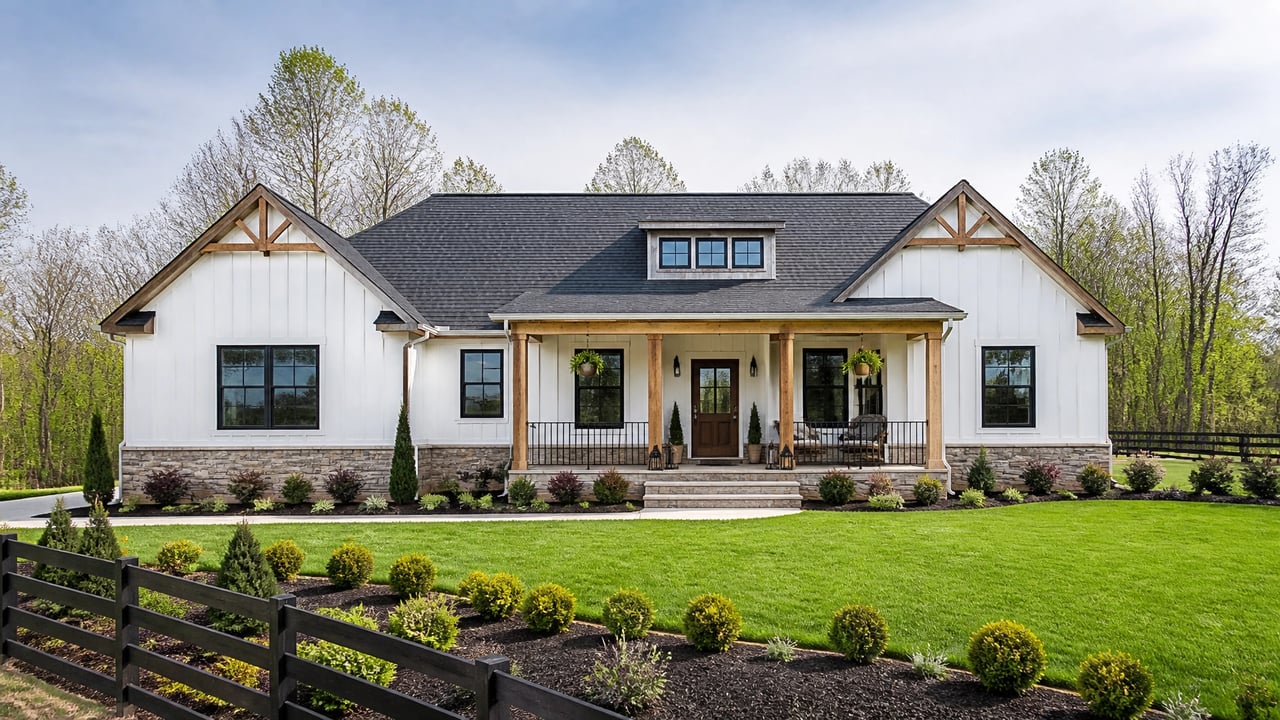
A buyer driving west on WV-9 from Loudoun tends to arrive at a simple mental model: prices are lower across the state line, West Virginia taxes homeowners lightly, and a slower market means an easier deal. Two of those assumptions hold. The third, and arguably the most important one for anyone writing an offer this summer, does not.
Charles Town is worth the drive. It is also a different transaction than the one buyers rehearse in Ashburn or Leesburg, and the differences show up at closing rather than on the listing page.
The tax bill that surprises Loudoun buyers
West Virginia's statewide effective property tax rate sits around 0.53%, roughly half the national average. That is the number NoVA buyers arrive with. The number they leave the closing table with looks different.
Jefferson County's median property tax bill is about $2,119, the highest of any county in West Virginia. Berkeley County next door sits closer to $1,438. The rate is low. The bills are not, for two reasons worth understanding before you write an offer:
- West Virginia assesses residential property at 60% of market value, then applies a per-$100 levy rate. On a $420,000 house, the taxable base is $252,000, not $420,000.
- Roughly 40% of a Jefferson County tax bill comes from voter-approved excess levies that sit above the constitutional maximum, primarily the school excess levy renewed by county voters. The county's baseline levy rate is not at the statutory maximum, but the excess layer is what pushes the effective bill upward.
Age-65 homeowners get the first $20,000 of assessed value excluded through the state homestead exemption, and reassessments run on a triennial cycle rather than annually. Both are consequential for a move-up buyer planning to stay ten years. Neither is intuitive coming from Virginia, which uses a straight fair-market assessment.
The "so what" for a buyer: budget the tax line at the Jefferson County median, not the West Virginia median. The gap is real money.
What "as-is" means at a West Virginia closing
The second surprise is procedural. West Virginia requires the seller to complete a state property disclosure form. That requirement does not disappear when a property is listed as-is. As-is limits the seller's willingness to renegotiate after inspection. It does not waive the disclosure of known defects, and failure to disclose known material issues can create post-closing liability for the seller regardless of the as-is language in the contract.
Two other closing details that catch cross-border buyers off guard:
- The West Virginia transfer tax runs $1.10 per $500 of sale price, or roughly 0.22% of the purchase price. On a $420,000 sale, that is about $924. In Virginia, the grantor's tax is split differently between buyer and seller depending on jurisdiction; the WV allocation is customarily negotiable but frequently sits with the seller.
- Deeds and mortgages are recorded at the Jefferson County Clerk's office, which accepts electronic filings through approved vendors. The recording step is straightforward, but the practical implication is that title search timelines run on Jefferson County's cadence, not on the Loudoun Circuit Court schedule your Virginia attorney is used to.
None of this is exotic. It is simply not the closing your listing agent in Ashburn walked you through.
Reading the July 2026 market
The market itself has softened in a way the median price alone does not show.
| Metric (Charles Town, July 2026) | Value |
|---|---|
| Median list price | ~$420,000 |
| Median list price per sq ft | ~$186 |
| Median days on market | 44–51 |
| YoY change in DOM | Down modestly from 2025 |
| 25414 ZIP average sale price | ~$423,000, up 13.2% YoY |
| Zillow average home value | $408,529, up 2.8% YoY |
The composite picture: prices are still climbing on a year-over-year basis, but homes are taking longer to sell than they did a year ago. Redfin's most recent snapshot for the broader Charles Town area also showed the median sale price sliding relative to the peak, even as the 25414 ZIP kept pace. When two credible sources point in slightly different directions, the useful read for a buyer is the one they agree on: this is no longer a market where the first weekend of showings decides the price.
That has two implications for negotiation. Contingencies that would have been stripped in 2022 are livable again. And a home sitting past the 50-day mark is not necessarily overpriced, but it is a candidate for a serious inspection-based ask.
What $420,000 actually buys
The median obscures more than it reveals in Charles Town, where the housing stock ranges from restored historic properties near George Street to production builds along the Bolingbroke and Marquee Farm corridors. Recent 25414 closings inside the last two quarters illustrate the spread: a 4,220-square-foot resale on S. Mildred St. closed at $470,000; a new 2,393-square-foot Abigail St. townhome closed at about $333,000; a 3,247-square-foot Marquee Farm Rd. home closed at $619,238; and a 1,929-square-foot Bolingbroke Way home traded at $333,339. The median is a midpoint, not a description.
For a Loudoun buyer trading equity in a $700,000 townhome, that spread matters. The move can buy square footage, land, or historic character, but rarely all three in the same submarket. New construction along the eastern edge trades on floor plan and finish. In-town resales trade on lot size, mature landscaping, and walkability to Washington Street.
The commuter math beyond the mortgage
The final variable NoVA buyers underweight is the county's non-residential economy. Hollywood Casino at Charles Town Races anchors an entertainment and hospitality footprint that pulls weekend traffic west from D.C. and Baltimore via US-340 and WV-9. The 2026 stakes schedule concentrates the biggest crowds on Friday, August 28, when the $1 million Charles Town Classic and $750,000 Charles Town Oaks run on the same card with a 5 p.m. first post. The West Virginia Breeders' Classics card follows on October 10.
Those dates are not trivia. They are traffic and short-term rental demand pulses that affect showing schedules, weekend listing appointments, and, for investor buyers, the calendar for pricing a small rental. The Inn at Charles Town, the 153-room hotel on the casino property, absorbs some of the demand. The rest lands in the surrounding rental market.
Cheaper than Loudoun on the sticker. Higher than the state on the tax bill. Slower than 2022 at the negotiating table. Charles Town in mid-2026 rewards buyers who price all three into the offer, not just the first one.
FAQ
Do I need a West Virginia attorney to close, or can my Virginia attorney handle it? West Virginia does not require an attorney at closing, and title companies handle most Jefferson County transactions. If your Virginia attorney is not licensed in West Virginia, you still want a WV-licensed title agent or attorney reviewing the disclosure form, deed, and transfer tax calculation.
How does the triennial reassessment affect a buyer who just closed? The assessor revisits real property at least once every three years. A recent sale is one of the strongest signals the assessor uses, so a buyer who purchases above the prior assessed value should budget for the tax bill to catch up to the sale price within a cycle rather than remaining pinned to the old number.
Is the WV disclosure form the same as Virginia's Residential Property Disclosure Statement? No. Virginia's statement is largely a caveat-emptor document directing the buyer to investigate. West Virginia's form asks the seller to affirmatively disclose known defects across specific categories. The two forms are not interchangeable, and a Virginia agent should not treat them as such when drafting.
Does the Charles Town Classic weekend actually affect closing timelines? For most transactions, no. For short-term rental investors underwriting a purchase near the casino corridor, the August 28 card and the October 10 Breeders' Classics card are meaningful revenue days that belong in the pro forma before an offer goes in.
If you are weighing a move from Loudoun, Ashburn, or Winchester into the Eastern Panhandle, or comparing a Charles Town listing against a Virginia alternative, the mechanics matter more than the median. Talbot Greenya Group works across the state line every week, and we would rather walk you through the tax math, the disclosure form, and the recent comparable sales before you write than explain them after you close. Get your instant home valuation or schedule a consultation to talk through your numbers.